NEWS
Leading arts bodies call on the government to go further to fully restore the status of arts subjects in schools
Leading arts organisations are calling on Andy Burnham and Lucy Powell to ensure the arts are a “fundamental part of every child’s school experience”.
Share
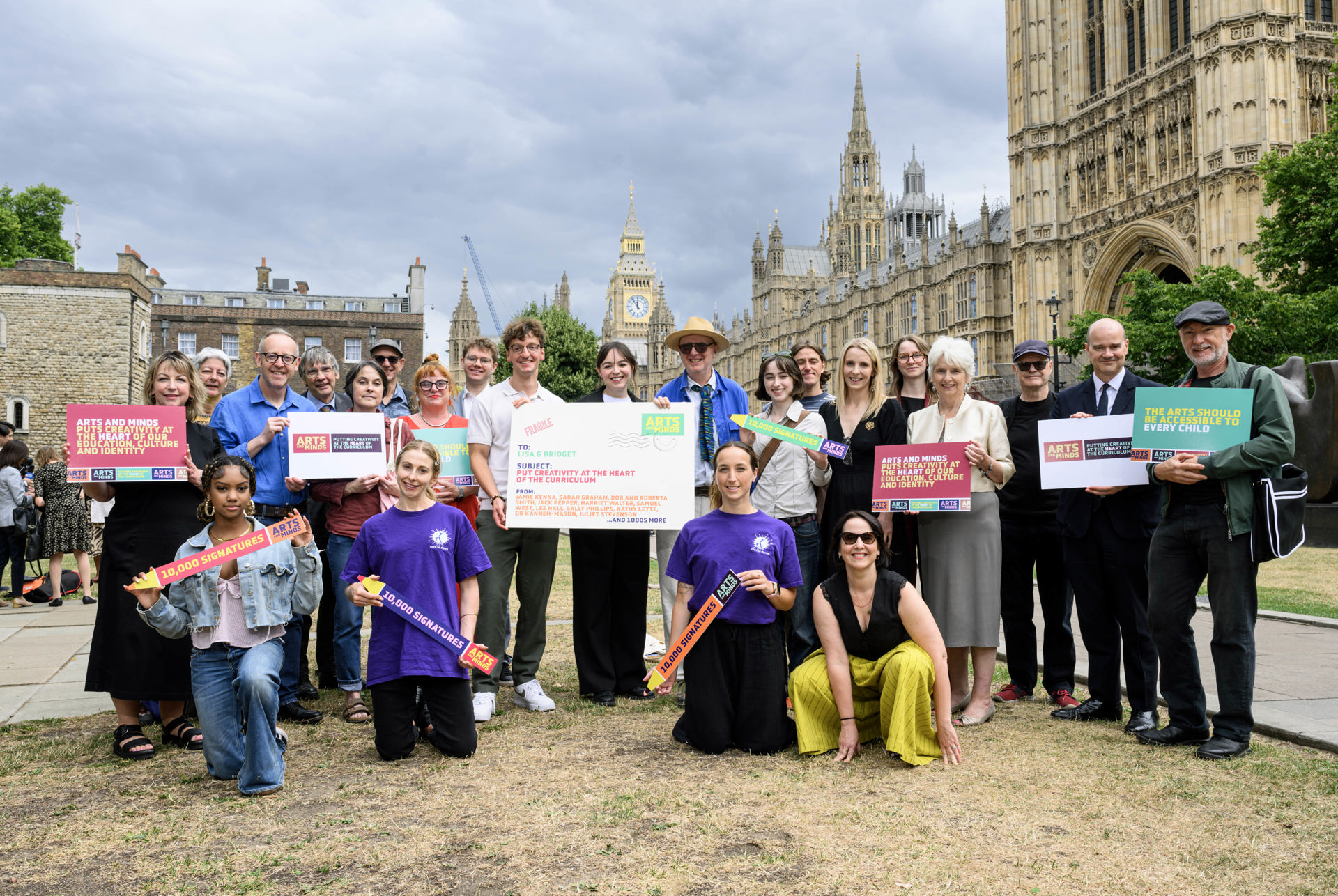
Leading arts and education organisations are calling on Andy Burnham, the new Education Secretary Lucy Powell and members of the government to go much further than their predecessors to ensure the arts are a “fundamental part of every child’s school experience”.
Prestigious arts and education bodies including the Royal College of Art, Chartered College of Teachers, Equity, the Musicians’ Union and National Education Union have co-signed a statement to the Department for Education and DCMS, co-ordinated by The Arts and Minds Campaign. [The statement has also been endorsed by campaign Arts Ambassadors, former children’s laureate Michael Rosen and artist Bob and Roberta Smith.]
The signatories argue that government initiatives to date — including scrapping the EBacc and new enrichment framework — amount to little more than “tinkering around the edges” and may even “entrench the status quo”.
When she was Shadow Minister for Digital, Culture, Media and Sport, Lucy Powell said, “Subjects like music, art, sport or drama must be available to all our children, not just some.”*
The statement calls on the government to:
Rethink current proposals for the Progress 8 model
Pause the use of Ofsted for enrichment benchmarks
Reinstate teacher training bursaries for arts subjects
Redress decades of underfunding
The statement concludes, “Only then will the status of arts subjects be fully restored and only then will every child have the chance to live a richer, larger life through the arts.”
Paula Briggs, CEO, Access Art comments, "The government has said it understands the importance of arts education, but now we need to see commitment and action. Listen to the experts. The messaging and policies from government need to enable decision makers, educators, parents and pupils to value the arts. Arts education isn't an optional extra; it’s how children develop confidence, curiosity, creativity and a sense of agency. If we truly value those qualities, we need to make arts education a priority for every child."
Helen Stalker, Director, Engage, comments, "Community cohesion, wellbeing, critical and expansive thinking: engagement with arts and culture is fundamental to all of these, yet it is still too often treated as peripheral to a child's development. The benefits are clear. Why are we still having to fight to ensure every child has access to them?"
The full statement reads:
We welcome the government’s commitment to ending the unacceptable gap in educational experiences left by the previous government. Promised reforms, including the removal of the EBacc, stand to meaningfully improve access to arts education for the most disadvantaged students in the country.
Unfortunately, we are concerned that its actions fall short of what is needed to fully restore the status of arts subjects. While ending the EBacc was supposed to open the door for more children to study the arts, other announcements and policies amount to little more than tinkering around the edges and may even entrench the status quo.
Progress 8 reforms
The recent proposals on the Progress 8 accountability measure risk perpetuating the low value given to arts subjects in schools.
Our specific concerns are:
The proposed framework risks incentivising schools to offer only one arts subject.
Schools that do not offer any arts GCSEs can continue to do so under the current proposals.
Lack of funding for staff and resources will reinforce the existing hierarchy of subjects.
“Every Child Can” and new enrichment framework
Meanwhile, the recently announced enrichment framework and “Every Child Can” programme is concerning on several counts. Support for the arts sits alongside four other areas and total funding amounts to less than £16 per pupil. This is a long way from giving every child the chance to benefit from arts activities throughout their school life.
Adding the enrichment activities to Ofsted inspections from this September — and before the new curriculum framework has been finalised — is also highly problematic. There is a real danger of further embedding the culture of underfunding and accountability with schools stretching their limited resources to meet yet more inspection demands.
What the government must do next
To fully deliver on its promises, the government must tackle the wholesale causes of the current status of arts in schools and work with the arts education sector to deliver a meaningful expansion of arts provision. The arts should not be an add-on or an optional extra; they should be a fundamental part of every child’s school experience.
This means:
Rethink current proposals for the Progress 8 model
Pause the use of Ofsted for enrichment benchmarks
Reinstate teacher training bursaries for arts subjects
Redress decades of underfunding
Only then will the status of arts subjects be fully restored and only then will every child have the chance to “live a richer, larger life” through the arts.