NEWS
How the arts power a healthier Wales: £588 Million Annual Impact on Health and Productivity
New research led by Bangor University estimates the financial value of health and productivity benefits through engagement with the arts in Wales.
Share
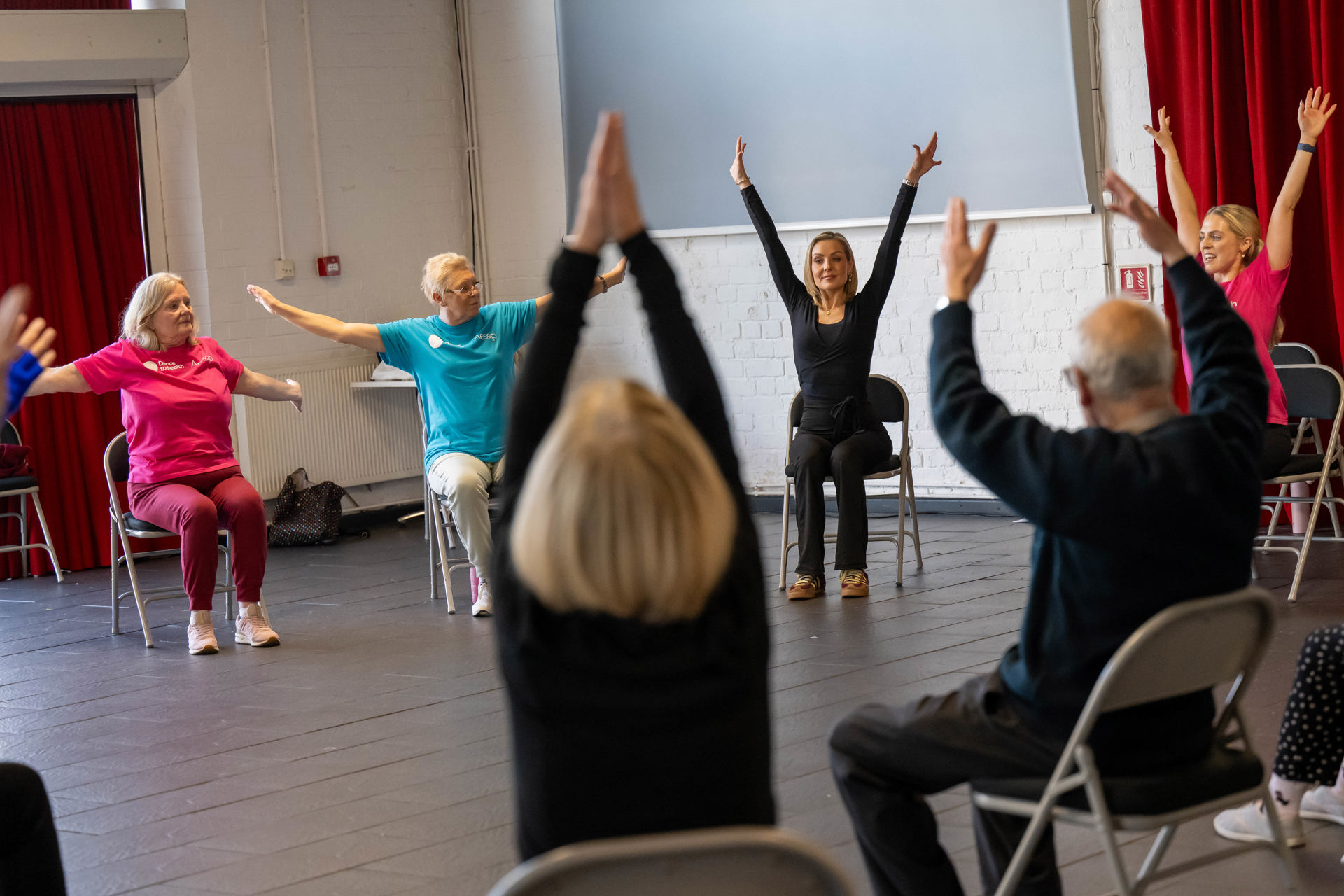
Amy Dowden, Emma Jenkins and class participants at Arts Council of Wales Report Launch. Image by Wales News Service
This is one of the conclusions drawn from brand-new research by leading health economists at Bangor University and researchers at Edge Hill University into the vital role the arts play in supporting public health and reducing pressure on essential services alongside delivering considerable wellbeing benefits to people of all ages.
This is first time the economic impact of the arts on the NHS and social care in Wales has been investigated at a national level, and the research was commissioned by Arts Council of Wales.
The independently-conducted report ‘Assessing the Economic Impact of the Arts on Health and Healthcare Services in Wales’ shows that engagement with the arts delivers at least £588 million in annual health and wellbeing benefits across Wales. The analysis applied recognised national models, used conservative assumptions throughout, and concludes that the true benefits are likely higher.
The report, which used population data and attendance and participation data provided by Arts Council of Wales, also found that:
- Arts Council of Wales’s investment in multi-year funded organisations (which include arts organisations and venues across Wales) generates a financial ROI of £11.08 in for every £1 invested in terms of health, wellbeing and productivity benefits.
Evaluations of specific Arts Council of Wales funded projects that target particular health conditions indicate:
- A dance for strength and balance programme has the potential to save £5m a year in healthcare costs by preventing falls amongst the elderly.
- If arts programmes could reach 5% of young people in NHS mental health pathways, this would generate annual mental health and wellbeing benefits of £9.5m.
- If 5% of all adult mental health GP appointments were avoided following engagement in the arts, this would save £17m per year.
- Arts programmes that support the health and wellbeing of NHS staff have the potential to save up to £3.5m a year through reductions in staff sickness and attrition costs.
Dafydd Rhys, Chief Executive of the Arts Council of Wales said: “The arts are delivering real, tangible health benefits for people and communities—and now we have the independent, robust evidence to prove it. This is a landmark moment for the sector and for public health in Wales.”
Professor Rhiannon Tudor Edwards, Co-Director of the Centre for Health Economics and Medicines Evaluation, School of Health Sciences, Bangor University, said: “This analysis is grounded in rigorous economic modelling, established national frameworks and conservative assumptions throughout. Even using cautious estimates, the evidence clearly shows that the arts deliver substantial and measurable benefits to population health and to our health and social care system. As independent health economists, we have provided evidence to support the strong case for including the arts within preventative health strategies in Wales.”
Case study: Falls prevention for older people
For example, amongst older people, falls and subsequent injuries represent a major health risk. Around 30% of people over the age of 65 will fall at least once each year, rising to 50% for those aged over 80. This equates to more than 130,000 older people in Wales experiencing at least one fall annually. The consequences are significant: falls cost the NHS an estimated £2.3 billion a year, with almost half of this (£1.1 billion) attributed to hip fractures alone.
One of the case studies featured in the report—Iechyd Da-wns! / Dance to Health—demonstrates the powerful preventative role the arts can play. This structured dance programme for over-60s is designed to reduce falls risk and build strength, balance and confidence. An evaluation of Dance to Health found the programme had the potential to save NHS England more than £79 million per year through avoided falls and reduced healthcare use. When these impacts are conservatively pro-rated to Wales’ older population, dance-based falls-prevention programmes could save £4.99 million per year for NHS Wales.
“Aesop is delighted that this study highlights Iechyd Da-wns!|Dance to Health as a programme that has real potential to improve lives and save the NHS money in Wales,” said Anna Williams, Interim CEO of Aesop Arts & Society. “We witness the benefits daily, with our participants building up their strength, balance and confidence as well as their social connections. Joy who attends our Morriston Marvels group on a Tuesday says, Dance to Health is 'just what the Doctor should have ordered!”
Maggie Russell, Chair of Arts Council of Wales, said:
“This report demonstrates powerfully how the arts contribute to a healthier, more resilient Wales. The evidence is clear: creative activity improves lives and reduces pressure on our public services. At a time of real challenge for public budgets, investment in the arts is both socially vital and financially astute.”
Amy Dowden:
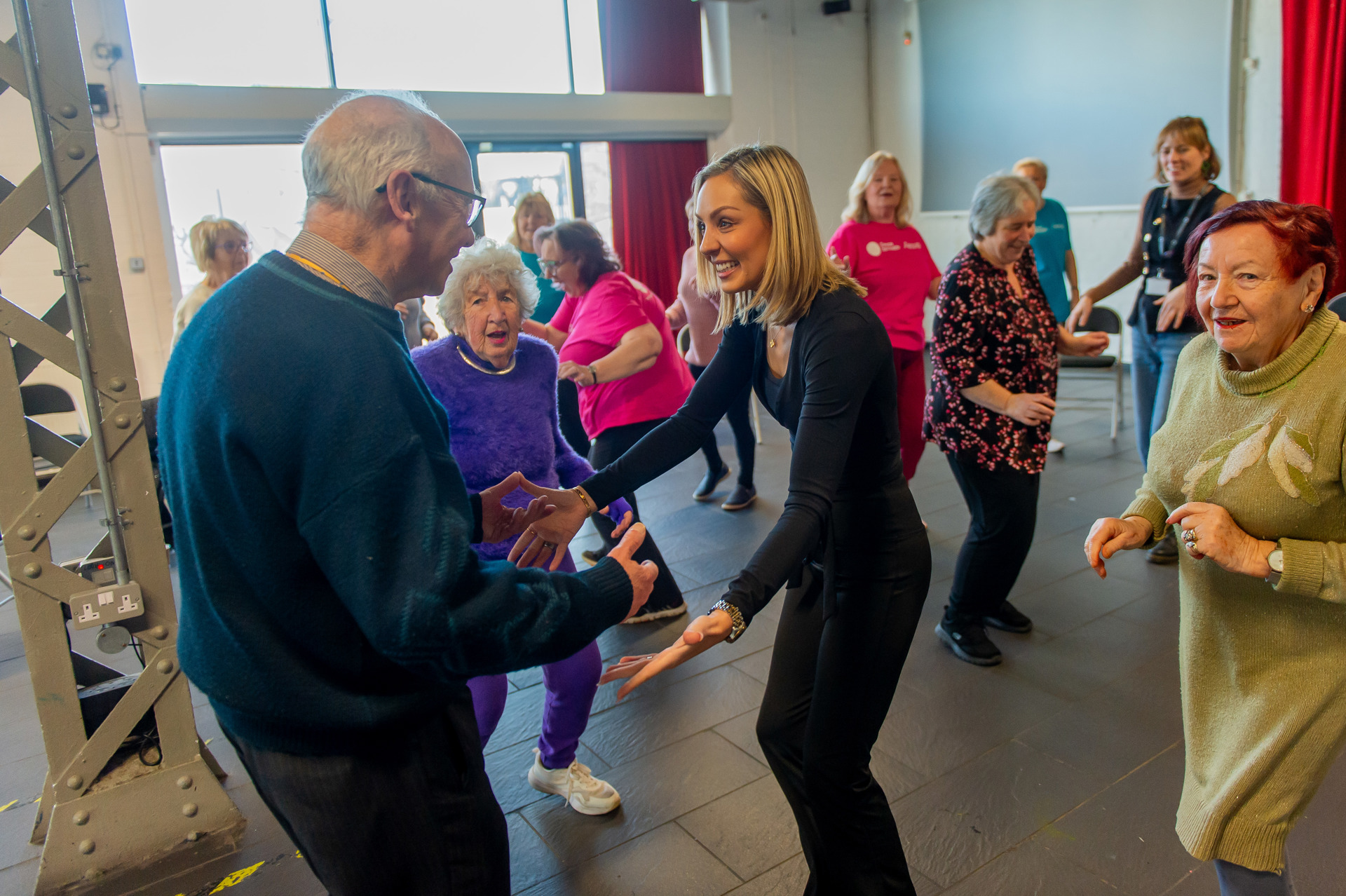
Strictly Come Dancing professional Amy Dowden helped launch the report at a Dance to Health class at the National Waterfront Museum in Swansea on Friday 16 January 2026. The programme, which helps over-60s build strength, balance and confidence through structured dance, is one of the success stories highlighted in the research.
Amy, who has spoken publicly about her own cancer journey, says: "I know too well the benefits that dancing and the arts has on everybody – getting your body moving, raising your heart rate, getting more flexible and stronger. Through my own health battles, dancing has got me through the darkest of times and I'm not sure I would be in the recovery position I'm in now without my dancing - I am not sure my bones would have got as strong as they are now after chemotherapy, not sure I would have got my physical fitness and stamina back, and most importantly it did so much for my mental health.
"This is more than a dance class, it's a community. People living on their own told me that they have a purpose – one lady told me that she would be lost without this class. She used to struggle walking in a straight line, now she's dancing and balancing on one leg. You can see the impact this class has had mentally and physically on everyone, and it makes you feel good inside. You see the smiles on everyone's faces."